
Wild Architects
QuickLinks
🎧🚗 Listen toThe Builders: How Beavers Mend Our Planet episode from Terrestrial
🎧🚗 Listen to “Home Tweet Home” episode of Wow in the World
📺 Check out the Osprey Cameras
📺 Watch the Animal Homes PBS nature series
📚 Eager by Ben Goldfarb -- this one's for grown-ups
📺 Watch this video to See How Termites Inspired a Building That Can Cool Itself on Decoder
📺 Watch the Bowerbird Grand Performance & cheeky bowerbird from BBC Earth
📱 Check out the iBeaver app to become a community scientist
Curiosity
Keep the fun going and learn more about how to be a wild architect.
-
How do you think these animals evolved to become expert engineers?
What can their role in nature teach us humans about engineering natural environments?
How can we learn to be engineers of our environments that actually help nature rather than hurt it?
-
Spot the builders!
When you're out in nature, you can start honing your eyes to see evidence of animal engineering. You might not see the animal, but you might see their handiwork.
The Goal
Find as many examples of animal engineering as you can! Make a goal for yourself at the beginning of a hike or the game. To make it extra fun, find someone to compete against! Whoever finds the most by the end of the hike or time period wins!
The Rules
Write it down and/or draw/take a photo of it
Describe where you found it and what it looks like
Each example gets a point
Bonus point: Describe how you think the animal made it or what purpose the structure is used for.
What to look for -- here are some examples
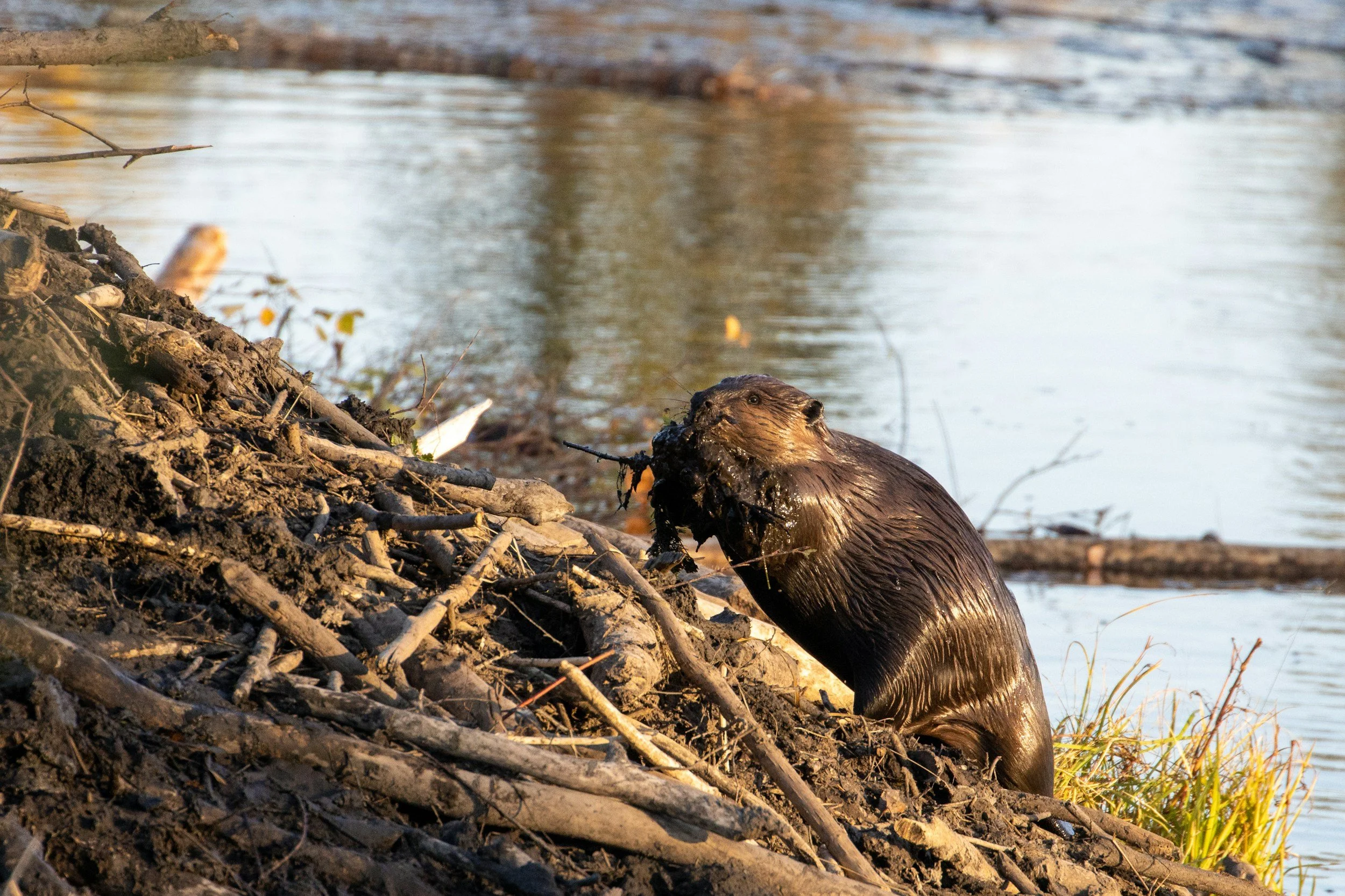
Beaver dams
Burrow holes
Termite mounds
Woodpecker holes (or do you even hear a woodpecker working?)
Spider webs
Beehives
Birds nests
-
ZOOMorphic Scavenger Hunt
Look for animal inspiration in the structures you see around your neighborhood and community!
Zoomorphic designs are human built structures inspired by nature. A jungle gym that looks like a spider web! A building that looks like a pickle! (This really exists--it's in London and it's called The Gherkin). A gate that looks like a beehive! These are all designs from nature.
Reflections
What cool things did you find and what did you like about them? Why do you think animal-engineered designs are used for inspiration for architecture and art?
-
Beavers Fun Facts:
Beaver dams prevent flooding and fires!
Beaver dams are designed to flex and adapt. They're created with a series of stepped pools that act like giant sponges. When a massive rainstorm hits, these ponds absorb the sudden rush of water and release it slowly.
In recent years, scientists have noticed that during intense wildfires, the wetlands created by beavers stay lush, green, and completely unburned. These "beaver complexes" act as natural firebreaks and provide safe havens for local wildlife fleeing the flames.
The world’s largest beaver dam, located in Wood Buffalo National Park in Alberta, Canada, is over 2,700 feet (850 meters) long—so large it can be seen from space! The front end of the dam is as large as seven football fields and the dam can hold approximately 92,000 dump trucks of water. Check out pictures here!
Show your knowledge by dropping the Latin names for beavers. The North American Beaver is the Castor canadensis and the Eurasian Beaver (native to Europe and Asia) is the Castor fiber. Scientists use Latin names because they are universally understood, or understood across all languages, by scientists across the world. Not to mention they're fun to learn and the words sound cool! Say castor canadensis three times fast ;)
Beavers smell like vanilla ice cream! This comes from a specialized scent gland near the base of their tail (and near their butts!) that secretes a molasses-like goo called castoreum.This musky slime is used to mark their territory, piling up mud mounds along the water's edge and coating them in castoreum to tell rivals, "This pond is taken." It smells like vanilla because of their diet of bark and leaves. Did you know that for decades, it was even used as a flavor enhancer in foods and a secret ingredient in luxury perfumes! Would you eat beaver bum ice cream?!
Beaver teeth are made for their job! Here are some ways they were designed for building:
Their lips close behind its front teeth allowing them to chew on wood, logs, and branches underwater without ever swallowing a drop of water or choking on sawdust;
They're self-sharpening! The front of their teeth contains iron making the enamel very hard and the back of their teeth lacks this iron and is made of softer dentin, so as they chew on wood, the softer back wears away faster than the hard orange front, creating a perpetually sharp, chisel-like edge.
They never stop growing! Because they use them constantly, a beaver's teeth grow continuously throughout its life. If they didn't chew wood, their teeth would eventually grow too long for them to eat.
Other Master Builders
Termites: Termites require a perfectly regulated microclimate to grow the fungus they eat. Their mounds function as giant passive solar lungs, using a complex network of vents to constantly circulate air, regulate humidity, and keep the interior cool even in blistering desert heat.
Woodpeckers: Woodpeckers excavate deep cavities into sturdy tree trunks to nest and roost. Because they often abandon these holes after a single season, they accidentally create a massive housing market for dozens of other species (like bluebirds, owls, squirrels, and tree frogs) that cannot drill into wood themselves.
Prairie dogs: Communities of prairie dogs create massive, underground cities that allow them to move around massive areas without the risk of being hunted by prey. As they dig, they churn and aerate the soil, channeling water deep into the earth and mixing nutrients that help diverse plant life thrive. The clipped grass around their burrows also creates perfect grazing plots for larger herbivores like bison.
Creativity
Let animal engineers and artists inspire you!
-
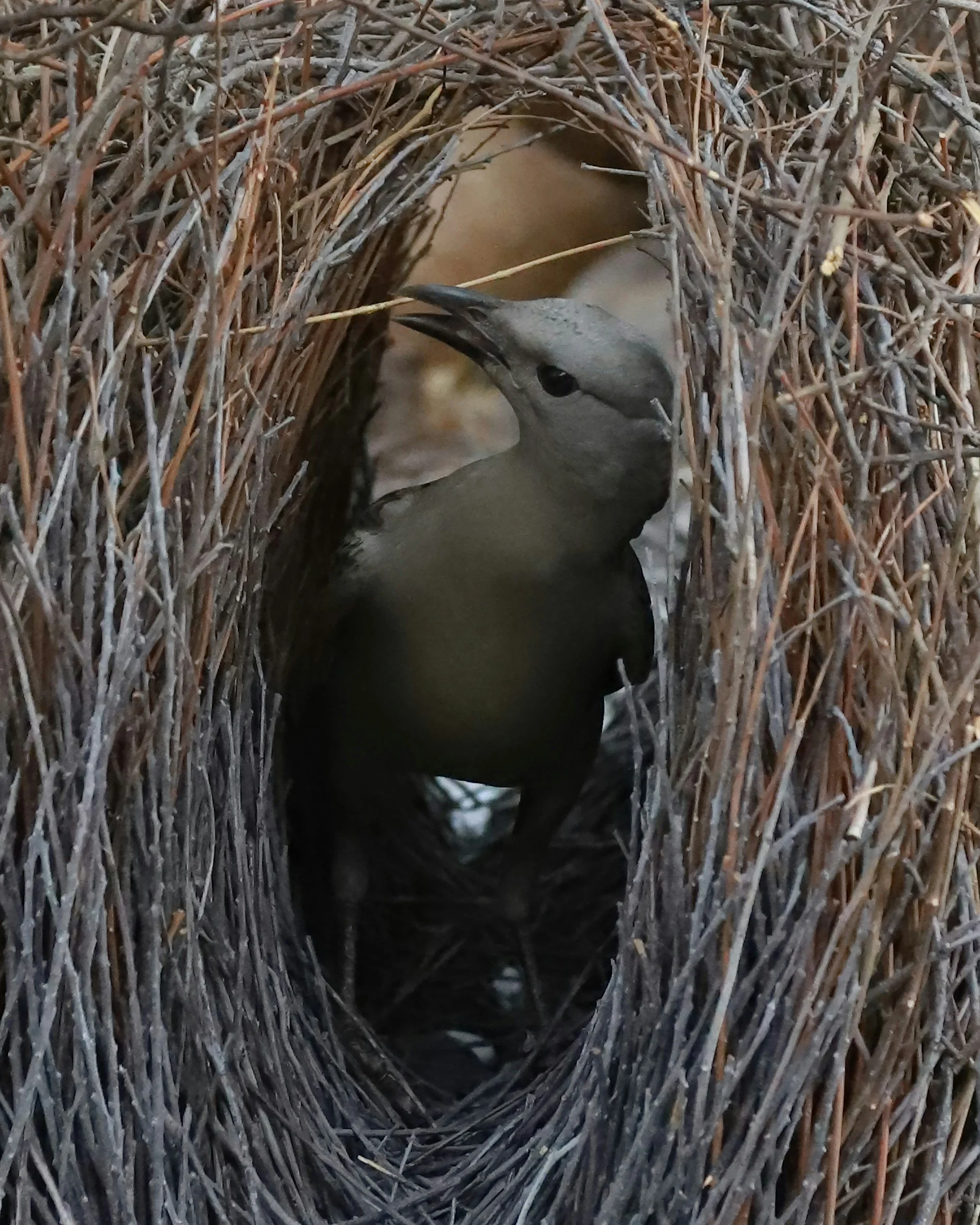
Bowerbirds are the original master artists and decorators. They even use complex visual techniques such as "forced perspective" or trompe-l'œil in their bowers—which is the exact same technique human pavement artists use to make flat drawings look 3D. How cool!
About the Bowerbird: If beavers are nature’s premier civil engineers, male bowerbirds are its interior designers and contemporary installation artists. Found mostly in Australia and New Guinea, these birds don't build nests to attract a mate—they build elaborate, highly stylized art galleries called bowers.
The Goal: Learn artistic tools and skills from the Bowerbird.
The Plan: Create an art piece—sculpture, drawing, or photograph—that uses some of the tools and techniques of the Bowerbird. Below are the techniques described, how the Bowerbird uses them, and how you can use them in your art.
-
Check out some of these techniques that bowerbirds use. Use these as inspiration for your art!
Natural pigment and brush: Male bowerbirds use natural pigments to “paint” their bower walls! They’ll chew up charcoal, dark berries, or colored plant matter and mix it with their saliva to create a paste. Then they’ll use a piece of bark or a leaf held in their beak as a rudimentary tool or sponge and meticulously apply this pigment to the inner walls of his bower. Check out this video on foraging for pigments.
Color theory: For some reason, bowerbirds (especially the Satin Bowerbird) like to use one color or hue in their designs (they especially like blue!). You can use this monochrome approach in your art piece. Pick a color and go with it! Monochrome is often thought of as purely black and white (and there are some spectacular black-and-white art pieces out there), but you can use other colors as the main color. But there are many examples of artists using different shades of other colors in their work.
Upcycling: Bowerbirds are collectors! They’ve been known to find human debris and use them in their bowers as ornaments. Find a way to incorporate clean, discarded human items (bottle caps, colorful plastic tags, broken pottery shards) into natural sculptures. This also could have an underlying message about human impact on nature (although we’re pretty sure the bowerbird was just wanting to find a mate). Noah Purifoy is one of the most renowned artists who used “junked” materials in his art. There is even an outdoor museum in the Mojave Desert near Joshua Tree in Southern California where you can experience his incredible sculptures in person. This photographer used the sorting method along with upcycled materials in “trash organized neatly.”
Forced perspective: This is a fancy way to say “fooling the eye” (or if you want to get even fancier, it’s called trompe-l'œil in French). What this means is creating a kind of optical illusion. The bowerbird does this usually to make themselves look larger. They do this by creating a kind of “stage” with pebbles, shells, and bones. They’ll place the larger objects at the farthest end of the stage away from the bower’s entrance and the smallest objects placed near where the female will stand to watch. This is a technique that sidewalk chalk artists use and photographers use them for interesting, optical illusion-style photos. Check out this website on how to do forced perspective photography with toys.
Sorting: Bowerbirds love to organize! You can use their cues to give yourself structural boundaries. Choose a color, a specific size, a type of object, a shape and place them in an organized, sorted fashion. Check out this art by Adam Hillman that uses both sorting and upcycled materials.
Connection
Humans take so much inspiration from animals. Check out how our human world is shaped by these amazing engineers.
Conservation
Take action to protect the beavers!
Beavers are the ultimate ecosystem engineers, and protecting them has enormous ripple effects for protecting water, creating wildfire resilience, and creating biodiversity. You can help advocate for these furry hydrologists in these ways:
-
Animals have evolved over millennia to become the best at what they do. Architects and scientists have actually studied the work of these master builders for human structures. This is called biomimicry describing scientific solutions that come from nature. Here are some examples of how animals are making humans do better work:
Termite mounds inspire natural air conditioning! The natural cooling abilities of termite mounds inspired architects behind The Eastgate Centre in Harare Zimbabwe in southern Africa, using passive cooling systems that don't require electrical air condition. Watch this video on how it works!
The Beijing National Stadium (the "Bird's Nest") was directly inspired by the structure of a bird’s nest. The woven steel frame provides immense structural strength while supporting a massive, semi-transparent roof.
Gustave Eiffel used the exact structural principles found in the human femur to design the curvature and truss network of the Eiffel Tower. This hierarchical lattice allows it to withstand wind and shear forces using a fraction of the material that a solid structure would require.
The Las Palmas Water Theater in the Canary Islands was inspired by the Namibian fog-basking beetle that harvests water from the air. The desalination plant (or de-saltifying section of the building) is facing a specific direction of the wind to catch and condense water from the air, a technique the beetle uses to catch water.
Other examples of animal or organically made structures that can inspire design include cacti and their water storage abilities, honeycomb and its sturdy by light structure, spiderwebs for strength and flexibility, and anthills for their organizational structure.
-
Listen to this episode of the Terrestrial podcast, The Builders: How Beavers Mend Our Planet and you’ll come out of it a “Beaver Believer.” A Beaver Believer are the beaver stans who see them as the ultimate ecosystem restoration tool. And they’re cute too! And grown-ups, you all should read or listen to Eager by Ben Goldfarb, the ultimate beaver believer starting-point.
-
Many organizations work on beaver restoration projects. Some of these organizations even host volunteer outings and events. Check out the organizations near you that do this work, if you have the means donate, and volunteer with them! Here are some examples:
Project Beaver: This organization empowers people to live with and partner with beavers and to help them do their job the best they can.
Beavers: Wetlands & Wildlife: An education non-profit helping communities and people coexist with beavers.
Beaver Institute: This organization supports scientific research on beavers as a means to watershed restoration.
-
You can get involved in beaver conservation with the iBeaver app from Defenders of Wildlife. If you see a beaver dam, you can open the app and enter information about the dam that you saw.
-
Education is one of the strongest tools for conservation. Many people who live near rivers and streams might see beavers as nuisances and others in cities might even know how cool beavers are. Let them know how cool beavers are! You can do this with friends and neighbors, but also with local leaders who are in charge of creating policy, or rules, of our natural environments.
You can do this by sharing the benefits they have on the environment! Share that beaver wetlands filter pollution, recharge groundwater, keep streams flowing during summer droughts, and create natural firebreaks during wildfire season. They’re the ultimate climate resilience tool!
Tell people about the organizations doing important and cool beaver work–encourage them to donate and get involved!