
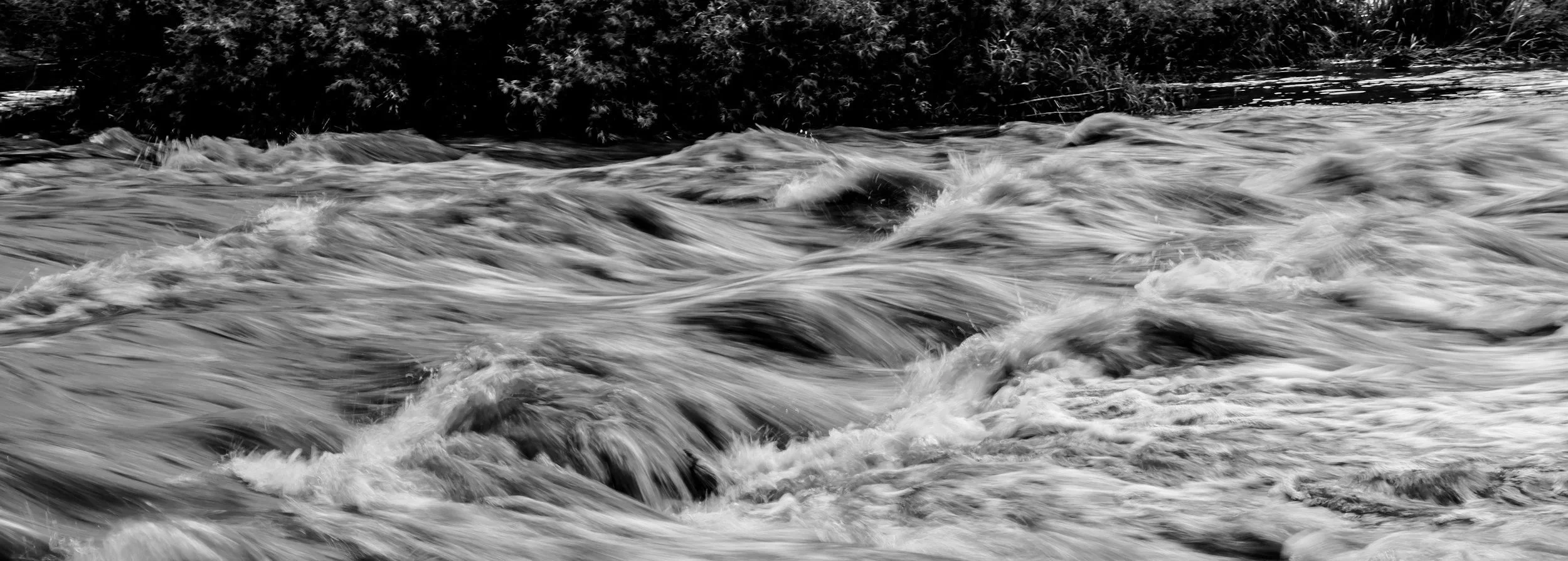
The Great Flood
QuickLinks
📺 Check out this Inspired Classroom “Echoes on the Land: The story of Glacial Lake Missoula”
📺 Watch the “Watermark” film from Capitol Reef National Park that gives an excellent geological history of the region – one that could apply to almost anywhere there is a canyon.
📺 Watch PBS’s Get Smart episode, The Unbelievable Story of Earth’s Most Epic Flood
🌐 Check out this ice age flood animation
Curiosity
Keep the fun going and learn more about water pathways and ancient floods
-
Look at the ground around you (even if it's dry right now). Can you find tiny canyons, carved-out grooves, or small streams left behind by the last heavy rain? Where do you think they lead?
If you were a tiny drop of water landing on this exact spot, trace the easiest path you would take downhill. Where would you end up resting—in a puddle, a storm drain, or a rushing river?
If this whole area was covered in a deep "great flood," look around at the tallest hills or highest trees. Where would the only dry land be, and who (or what) might be gathered there?
Water is powerful enough to wash away dirt and smaller plants. Find a tree growing near a creek or river. Notice how its thick, strong roots act like an anchor, holding the entire ecosystem in place during the great rush.
Floods can cause a lot of trouble, but they also have positive effects on ecosystems. Can you think of any? (Hint: cleaning and clearing, moving nutrients and soil)
-
Many rivers have multiple sources or tributaries. A tributary is another creek or river from a different source that joins the main river, making it larger. The rivers come together at a spot known as a confluence. Here are a few ideas to keep your river flowing!
While you are in NATURE
1) Identify different parts of your river.
2) Have a friend or family member act as a tributary. Stand a few feet apart and pour your water at the same time: Do the rivers form a confluence, or do they never connect? Why?
3) Can you find a different spot where your rivers would connect, one where they would not connect?
4) Have everyone in your group stand in a line and pour water onto the same spot, one after another, to create a continuous stream.
Does the water follow the same path?
What happens if someone pours more water, faster?
How does the river change over time?
After everyone has had a turn (or two, or three), look at the ground. Can you trace the path of your river?
5) When you see a river or a creek, try to identify what section you are looking at!
What do you notice about the ecosystem around the river or creek?
What types of plants do you see growing on the river banks? Are they the same or different from plants growing away from the water?
What kind of wildlife and birdlife do you see near the water?
What path does the water take?
Are there rapids or is it meandering along?
If you close your eyes and listen, can you guess what the water is doing? (moving quickly, slowly, around obstacles, etc.)
While you are at HOME
Here is a classic water cycle science experiment that can easily be done at home with household supplies.
Creativity
Be inspired by the natural state of water and what it’s capable of
-
Pure water is actually clear, but deep water looks blue because it acts like a filter, absorbing the red parts of sunlight and scattering the blue light back to our eyes. However, when water gets mixed with other elements in nature, it changes color like magic:
Green: Caused by tiny, floating organisms called algae or phytoplankton that use green chlorophyll to catch sunlight.
Turquoise/Teal: Often found in glacial rivers or lakes, where heavy glaciers grind down rock into a super-fine powder called "glacial flour." When sunlight hits these floating rock particles, it reflects a stunning turquoise glow.
Brown/Black: Usually caused by kicked-up mud, soil, or "tannins"—which organic matter like decaying leaves and tree bark release into the water, steeping the river like a giant mug of tea.
-
The Cup vs. The Ocean: If you scoop up a cup of water from a bright green or deep blue lake, why does it look completely clear inside the glass?
Weather Watch: Look at a nearby pond or river on a bright, sunny day versus a cloudy, stormy day. How does the mood of the sky change the color of the water?
The Magic Puddle: Find a puddle on your walk. Is it blue like the sky, brown like the dirt, or showing a rainbow sheen? What story is that puddle telling you about what's mixed inside it?
-
Challenge your junior scientist to recreate the shifting shades of nature's water using simple paints.
The Materials: Watercolor paper, a paintbrush, water, and watercolor paints (specifically blue, green, brown, and yellow).
Step 1: Draw three or four empty circles on the paper.
Step 2: Inside the circles, try mixing custom water shades. Create an "Ocean Blue" using heavy blue pigment. Create a "Glacial Turquoise" by mixing blue with a tiny dot of yellow and green. Make a "Forest Stream" by blending brown with a splash of yellow to look like leaf tannins.
Step 3: Take your dried "water swatches" outside to a local creek, pond, or puddle. Hold your paper up to the water—which of your custom mixes matches the real-life environment perfectly?
-
Explore these famous masterpieces together to see how world-class artists captured the changing colors of water:
Claude Monet – Bridge over a Pond of Water Lilies: Look closely at the water under the bridge. It isn't just blue! Monet used thick layers of greens, yellows, and purples to show the reflections of the trees and algae in the pond.
Katsushika Hokusai – The Great Wave off Kanagawa: Notice how Hokusai used a deep, dark Prussian blue for the churning depths of the ocean wave, making it contrast sharply against the bright white foam.
John Singer Sargent – Mountain Stream: Sargent was a master of watercolor. In this painting, you can see how he used soft browns, grays, and whites to show clear river water rushing over stones and reflecting the muddy river banks.
David Hockney – Swimming Pool Series: For a completely modern look, check out Hockney's pool art. He uses bright, vivid turquoise and electric blues to show how light shifts across clean, artificial water.
Connection
Learn more about the human connection to cataclysmic floods of history
-
Geology now confirms that devastating, though not strictly "global," floods have shaped regional landscapes.
Glacial Lake Missoula (c. 15,000–13,000 Years Ago): The most dramatic flood known occurred when a lobe of the continental ice sheet advanced to dam the Clark Fork of the Columbia River, creating the massive Glacial Lake Missoula. This ice dam repeatedly failed, catastrophically emptying the 500-cubic-mile lake. A terrifying wall of water, ice, and rocks tore across eastern Washington at speeds up to 65 mph, sculpting the unique landscape of the Channeled Scablands, including the massive gorge of Grand Coulee and giant ripple marks 35 feet high.
-
Séliš and Ql̓ispé (Salish and Pend d'Oreille): Traditional oral literature from the Salish-speaking peoples extends back to the end of the last Ice Age, recounting when Glacial Lake Missoula filled the valleys and subsequently drained. Their ancient trails and gathering sites were shaped directly by the shifting waters and receding shoreline. Learn more here.
Ktunaxa (Kootenai): Archaeological and cultural histories of the Ktunaxa detail how massive floodwaters scoured the landscape, mirroring modern geological findings. Their oral accounts mention the massive body of water, the failure of the glacial dam, and the survival of their ancestors through those brutal Ice Age environments. Learn more here.
Blackfeet (Niitsitapi): Living along the Rocky Mountain Front, the Blackfeet Nation shares traditions describing ancient, cataclysmic floods and the harsh weather associated with the end of the ice age. Learn more here.
-
Ice Age Floods Institute: "Glacial Lake Missoula"
National Geographic: "How Did Channeled Scablands Form?"
The Black Sea Flood Theory: "Sea level change along the Black Sea coast from satellite altimetry, tide gauge and GPS observations”
Conservation
Water is life! Rivers are such important parts of our ecosystem and we must work together to protect them
-
Here are some of the leading organizations across the country working hard to keep waterways healthy, clean, and free-flowing:
American Rivers: This is one of the nation's leading river conservation non-profits. They focus on protecting wild rivers, restoring damaged streams, and removing old, unsafe dams to reconnect floodplains and help fish and wildlife thrive.
River Network: Founded in 1988, this group connects and supports a massive national network of local communities and grass-roots clean water advocates, ensuring equitable access to safe water.
Western Rivers Conservancy: Operating under the unique approach of buying land to protect rivers, this group purchases critical property along the finest rivers in the West to protect wildlife habitats and ensure permanent public access.
Waterkeeper Alliance: A global network with numerous local chapters in the U.S. (like the Potomac Riverkeeper or Hudson Riverkeeper) that acts as "neighborhood watchdogs" for local waterways, patrolling rivers and holding polluters accountable.
The Nature Conservancy: While they protect all kinds of ecosystems, they place a massive focus on conserving river basins and fresh water—such as the Mississippi and Colorado River systems—to ensure both people and nature thrive.
-
River & Water Conservation for Kids
Getting kids involved in water conservation doesn't require a science degree! It’s all about shifting daily habits and encouraging them to look at water as a shared, living resource. Here are actionable things they can do and meaningful concepts they can think about:
Things Kids Can DO:
Be a Neighborhood Trash-Buster: Organize a mini-cleanup during a walk near a park, stream, or even just your local storm drains. Remind them that all litter left on the street eventually washes into the nearest river when it rains.
The Brushing-Teeth Challenge: Turn off the tap while brushing teeth. A running faucet can waste up to 4 gallons of water a minute—challenge them to see how many gallons they can save in a single week.
Catch "Bonus" Water: Put a clean bucket in the shower or sink while waiting for the water to heat up. Kids can rescue this "gray water" and use it to give house plants or the garden a drink.
Build a Backyard Rain Gauge: Place an empty jar outside before a rainstorm and use a ruler to track how many inches fall. Use it to talk about how nature waters the ground for free, and how we can use rain barrels to store it.
Plant Deep Roots: Help plant native flowers or shrubs in the yard. Native plants have deep root systems that naturally anchor the soil, preventing soil erosion and muddying local rivers.
Things Kids Can THINK ABOUT:
The Watershed Web: “Where does a raindrop go when it hits our roof?” Have them trace the invisible path water takes from your driveway, down the street gutter, into the closest creek, and eventually out to the ocean.
Animal Dependence: “If our local river dried up tomorrow, what would the deer, eagles, and frogs do?” Help them connect river health directly to the survival of their favorite wild neighbors.
The Invisible Footprint: Introduce the idea that it takes water to make things, not just to drink. It takes water to grow the cotton for their favorite t-shirt and to produce the food on their plate.
Sharing the Tap: “We share our water with thousands of other families, plants, and animals.” Ask them how your family can practice being a "good neighbor" by leaving enough clean water for the rest of the ecosystem.