
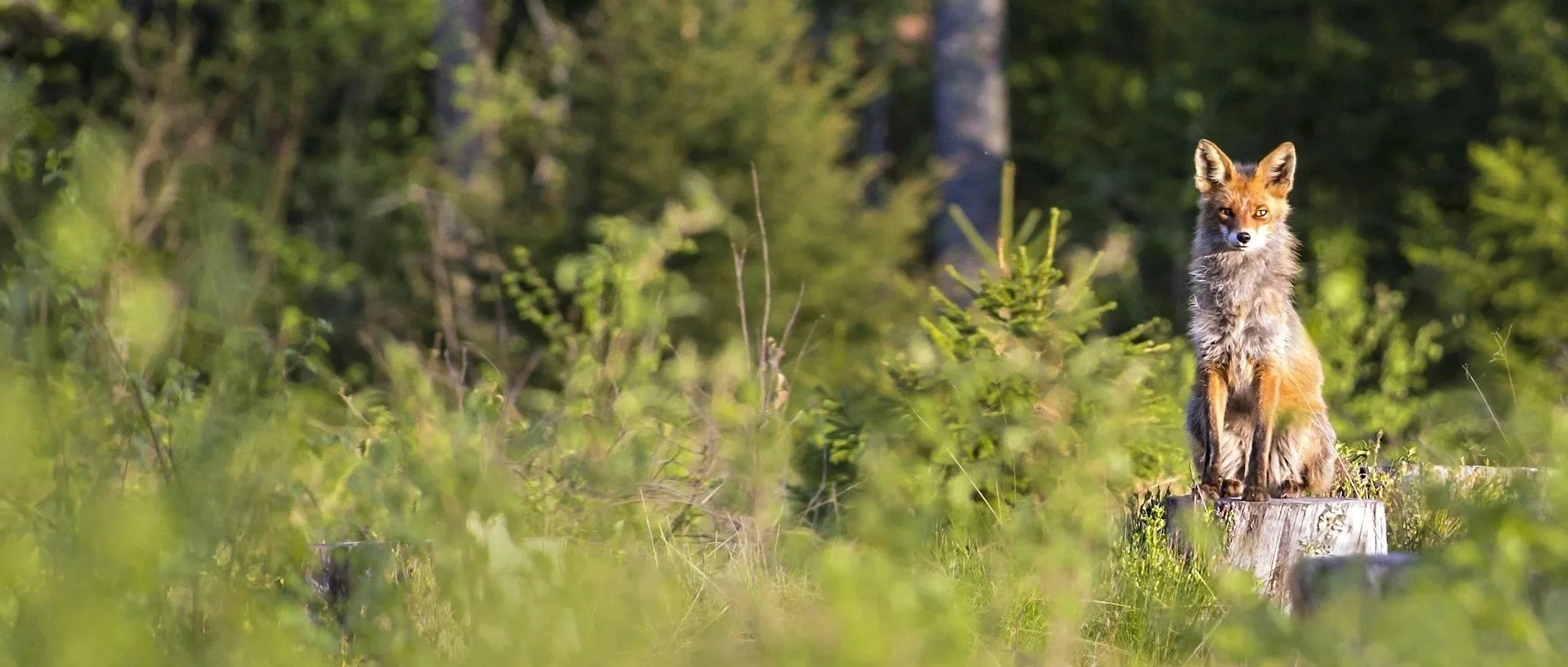
Fox Walk
QuickLinks
📺 Watch BBC Earth: The Secret Life of Foxes
📺 Watch this video on track identification
🌐 Check out “Swift Fox” information from Defenders of Wildlife
🌐 Learn about tracking animals at bear-tracker.com
📱 Become a community scientist by identifying and logging wildlife, plants, and fungi at the Seek app by iNaturalist
Curiosity
Keep the fun going
-
The Weight of a Footstep: When you walk normally, which part of your foot strikes the ground first? How does changing your stride to a fox walk alter the sound you make?
The Fox's Motive: Why do you think a fox needs to move so invisibly and silently? Is it to hide from danger, sneak up on dinner, or both?
Shock Absorbers: When you bend your knees and lower your center of gravity to fox walk, how does your balance feel compared to walking stiffly?
-
While you are in NATURE
Game
Play a game of "Wildlife Stalking." Have one person stand with their back turned (acting as a deer or a bird), while the kids try to fox walk up and gently touch their shoulder. If the "animal" hears a leaf crunch or a stick snap, they spin around, and the stalkers must freeze. If the ‘deer or bird’ sees the fox moving, they need to take five steps backward! Repeat until the fox can touch the prey, or until they cross the starting line backward, then change roles. To take it a step further, try fox-walking barefoot on a safe, grassy or sandy trail to truly feel the earth beneath your feet.
Tracking
While practicing your silent fox walk, look down at the mud, sand, or snow to see who else has been moving through the area. You can figure out whether a mystery track belongs to the Canidae (dog) family or Felidae (cat) family by looking for a few simple shapes:
Canidae (Dogs, Foxes, Coyotes, Wolves): These tracks are oval-shaped and symmetrical—if you imagine folding the print in half lengthwise, both sides would align. Because canids cannot pull their claws in, you will usually see tiny claw marks at the tips of the four toes. Most importantly, the negative space (the blank ground between the toes and the main heel pad) forms a clean letter "X".
Felidae (Cats, Bobcats, Mountain Lions): These tracks are much rounder. They are asymmetrical because one toe sits slightly higher up, just like a human middle finger. Cats have retractable claws, so they rarely leave claw marks behind. Instead of an "X", the empty space in a cat print forms a curve like an upside-down "C".
Fox Prints are small (about 2 inches long), tightly compressed, and incredibly neat. They show a very sharp, delicate "X" in the middle. Wild foxes also travel in a perfectly straight, purposeful line, placing their back paws directly into the prints left by their front paws to conserve energy—a pattern called a direct register.
Check out this resource to help you identify the different tracks (it is a PPT and can be printed and taken with you)
-
You don't need to be deep in the forest to use your tracker superpowers! Take a walk around your neighborhood sidewalks, driveways, garden beds, or park paths after a rainstorm or morning dew. Challenge your child to hunt for tracks left by local pets:
Have them inspect soft dirt or damp pavement to see if they can find the claw marks of a neighbor's dog or the clean, round print of a wandering house cat.
Ask them to note the behavior written in the ground. Domestic dog tracks usually splay outward, wander erratically, and cross over themselves because the pets are safe and playing. Contrast this with the single-file, straight line a wild fox must use to move invisibly.
Be an observer. House cats and dogs are descendants from their wild cousins. Grab your field guide and make observations about your neighborhood animals! Can you identify different behaviors such as stalking, pouncing, scent tracking (or scent leaving)? What else do you observe?
-
The "Mouse Pounce": Foxes use a spectacular pouncing technique in the winter, leaping high into the air and diving headfirst into the snow to catch prey hiding in underground tunnels.
Hyper-Sensitive Hearing: Their hearing is so precise they can reportedly hear a watch ticking from 40 yards away or pinpoint the exact location of a scurrying mouse beneath a thick layer of snow.
Cat-Like Claws: Some species, like the Gray Fox, have semi-retractable claws that allow them to climb up and down trees easily.
Diverse Vocalizations: Foxes can produce over 40 different sounds, ranging from soft purrs to a blood-curdling, human-like scream.
Family Structure: Male foxes are called "dogs," females are "vixens," and a group is collectively called a "skulk".
Creativity
Let nature inspire you
-
Find a patch of soft mud, wet sand, or loose dirt. Have your child walk normally across it for 10 steps, then fox-walk directly alongside their first path. Use your field guide to sketch or photograph both sets of tracks.
Notice the visual differences: normal walking often leaves deep, heavy heel strikes and messy edges, whereas a proper fox walk leaves lighter, evenly distributed ball-of-foot impressions.
Just like you and me, animals will often follow paths that already exist. This might include following a human-made trail, an animal trail, walking across a fallen log, or skirting the edge of a clearing.
Challenge your child to draw a "silent map" in their notebook, using dotted lines to show where the stealthiest paths are through a landscape.
-
Fox walking connects us directly to the land by forcing us to change how we process our surroundings. Instead of staring straight down at our feet or rushing forward, moving with stealth requires us to look up and activate our "wide-angle" or peripheral vision, widening our field of view to 180 degrees. This shifts the forest floor from a simple sidewalk into a highly sensitive landscape where every leaf, dry twig, and patch of moss dictates your next step.
This practice draws deeply from the ancient tracking, hunting, and scouting methodologies of Indigenous communities, such as the Apache scouts. For thousands of years, moving invisibly and preserving the forest's baseline quiet were vital skills for hunting, navigation, and survival.
To many Indigenous communities, the fox is a profound symbol of identity, history, and resilience, woven directly into the names, seals, and stories of sovereign nations.
-
The Fox People (Northeast Woodlands): The Mashantucket Pequot Tribal Nation features a fox prominently on their official tribal seal. Known historically as "The Fox People," the fox stands as a vital reminder of their endurance, agility, and deep cultural identity tied to the "much wooded land" (Mashantucket) where their ancestors hunted. You can read their story of survival and land stewardship directly on the official Mashantucket Pequot Tribal Nation History Portal.
The People of the Red Earth (Midwest Woodlands): The Sac & Fox Tribe of the Mississippi in Iowa is recognized today as the Meskwaki Nation. While early French explorers misnamed them "Renards" (the Fox), they have always identified themselves as the Meskwaki ("People of the Red Earth"). Rooted in the Eastern Woodland Culture, they hold a deep, enduring connection to their woodland homelands and strive to preserve their language and traditional land practices. Explore their heritage first-hand on the Meskwaki Nation: Indigenous History and Spirit platform.
-
By slowing down to a fox walk, children learn to view the woods through this same lens of deep respect—treating the wilderness not as a noisy playground to disrupt, but as a historic, shared neighborhood to move through quietly.
Connection
Learn about connection between people and foxes
Conservation
Wildlife conservationists across the United States work hard to protect predators like foxes and the open spaces they need to survive. Because cities and highways fragment the wilderness, a major focus of modern conservation is creating wildlife corridors—safe, unbroken pathways of land that allow animals to roam, hunt, and find mates without danger.
-
The National Wildlife Federation (NWF): One of America's largest conservation organizations, the NWF focuses on protecting wild places and restoring habitats. They offer fantastic resources specifically for children and schools to learn about local wildlife.
Wildlands Network: This organization specializes in mapping and protecting massive wildlife corridors across North America, ensuring that roaming mammals like foxes, bobcats, and wolves can travel safely between disconnected forests.
iNaturalist: A powerful citizen-science platform run by the California Academy of Sciences and the National Geographic Society. It allows everyday citizens to upload photos of plants, animals, and tracks to create a giant, real-time map of global biodiversity used by actual scientists.
-
You don’t have to be a grown-up scientist to protect wild animals! Here are real things you can do right now to look out for your local foxes and wildlife:
Become a Community Scientist: Download the child-friendly Seek by iNaturalist app on a parent's phone. When you find a cool trackway on your fox walk, take a clear photo of it. Your upload helps biologists map out exactly where wild animals are traveling in your town.
Secure the Scraps: Foxes are incredibly smart and will quickly learn to eat garbage or pet food left outside. Eating human food makes wild foxes sick and teaches them to lose their natural fear of humans. Keep the wilderness wild by making sure your outdoor trash cans have locking lids.
Keep Domestic Pets Managed: House cats and loose dogs can easily scare away wild animals, destroy hidden dens, or accidentally spread diseases to wild fox populations. Be a respectful neighbor by keeping pet cats indoors and keeping your dogs on a leash when exploring nature trails.
Guard the Silent Spaces: Foxes rely on their hyper-sensitive hearing to hunt—they can actually hear a mouse squeaking or rustling under a deep layer of snow! By practicing your quiet fox walk in nature, you reduce human noise pollution, letting wild animals hunt peacefully without being startled.