
Curio Camp Cards
Each deck includes four categories of learning and movement activities. All of the activities connect to a larger concept, but there’s only so much a kid can take on at any given time, so if there are any lightbulb moments that you see, jot those down and follow up later. We provide additional materials on QR codes for more resources.
Categories of Cards:
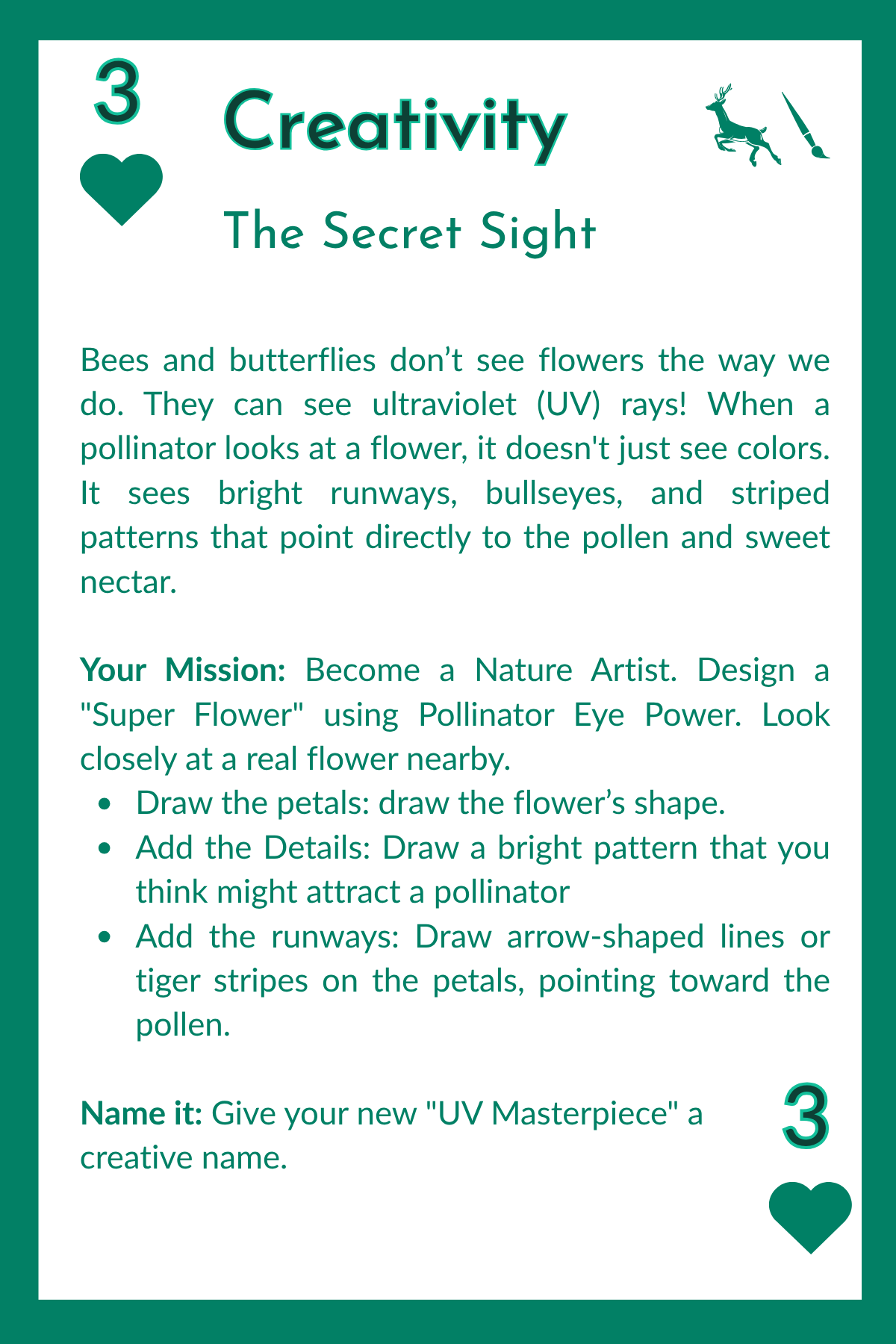
Creativity: These activities help tap into kids’ creativity through telling stories
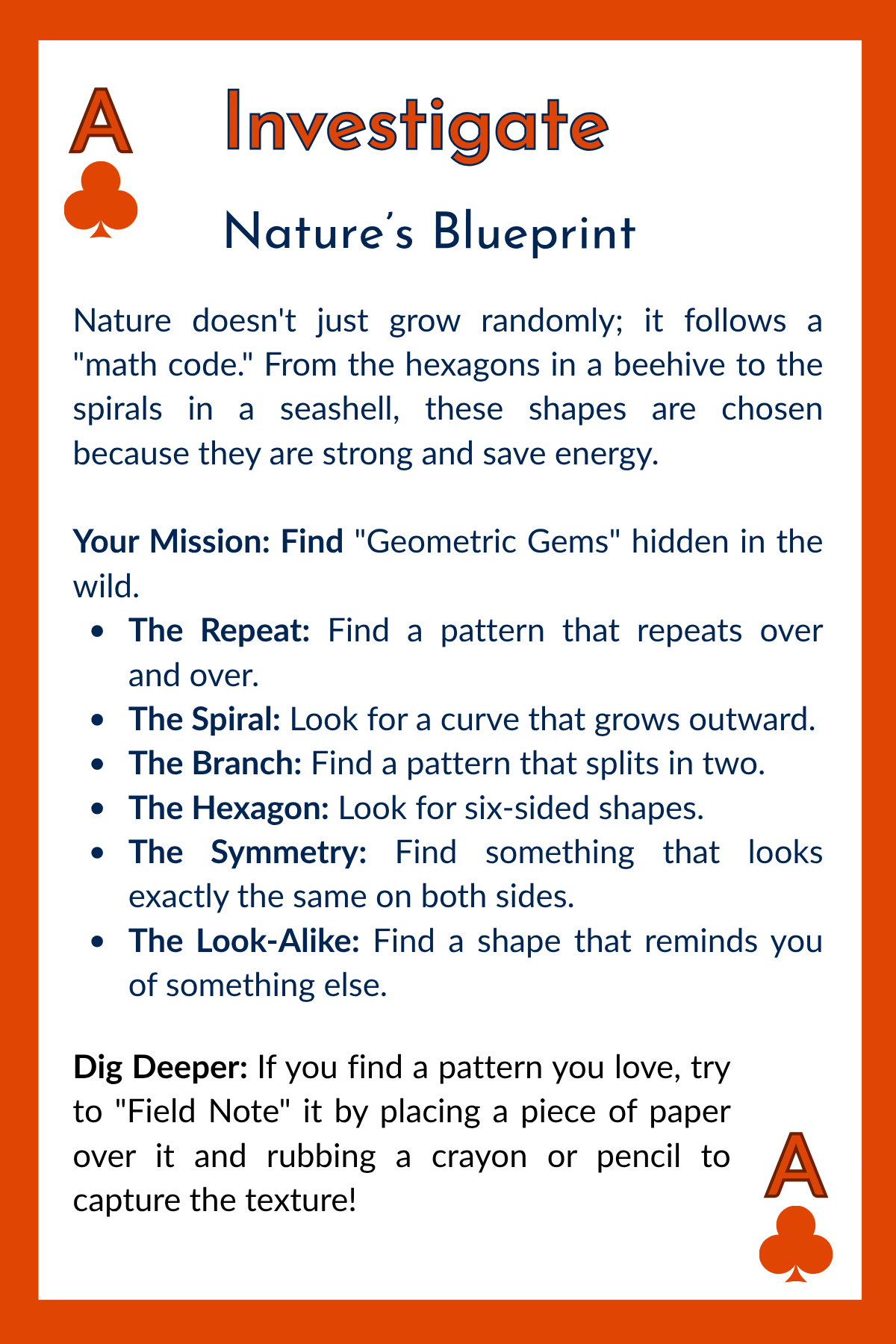
Investigate: An introduction to scientific inquiry through fun activities
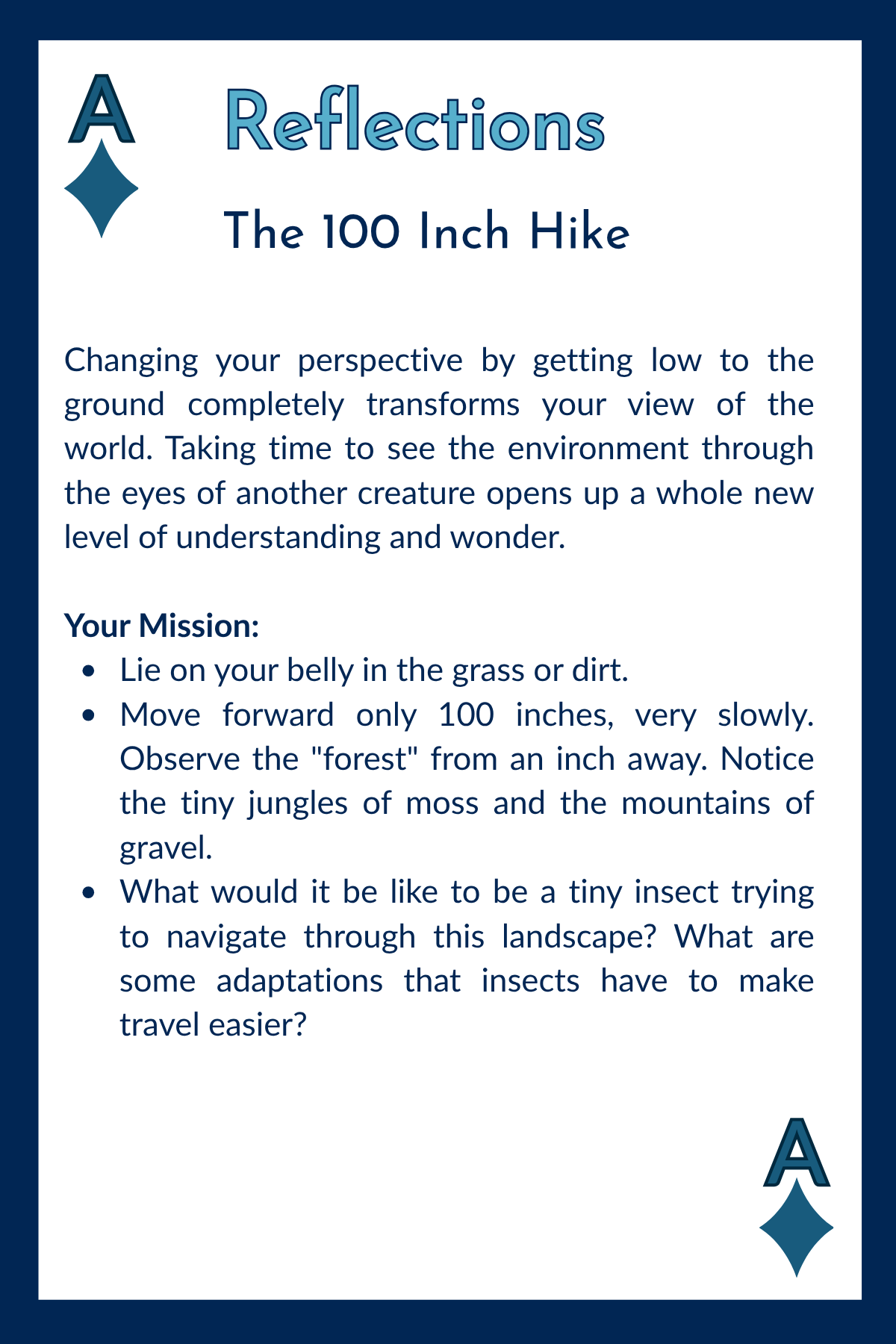
Reflections: Opportunities to slow down, be peaceful, and connect more deeply with nature
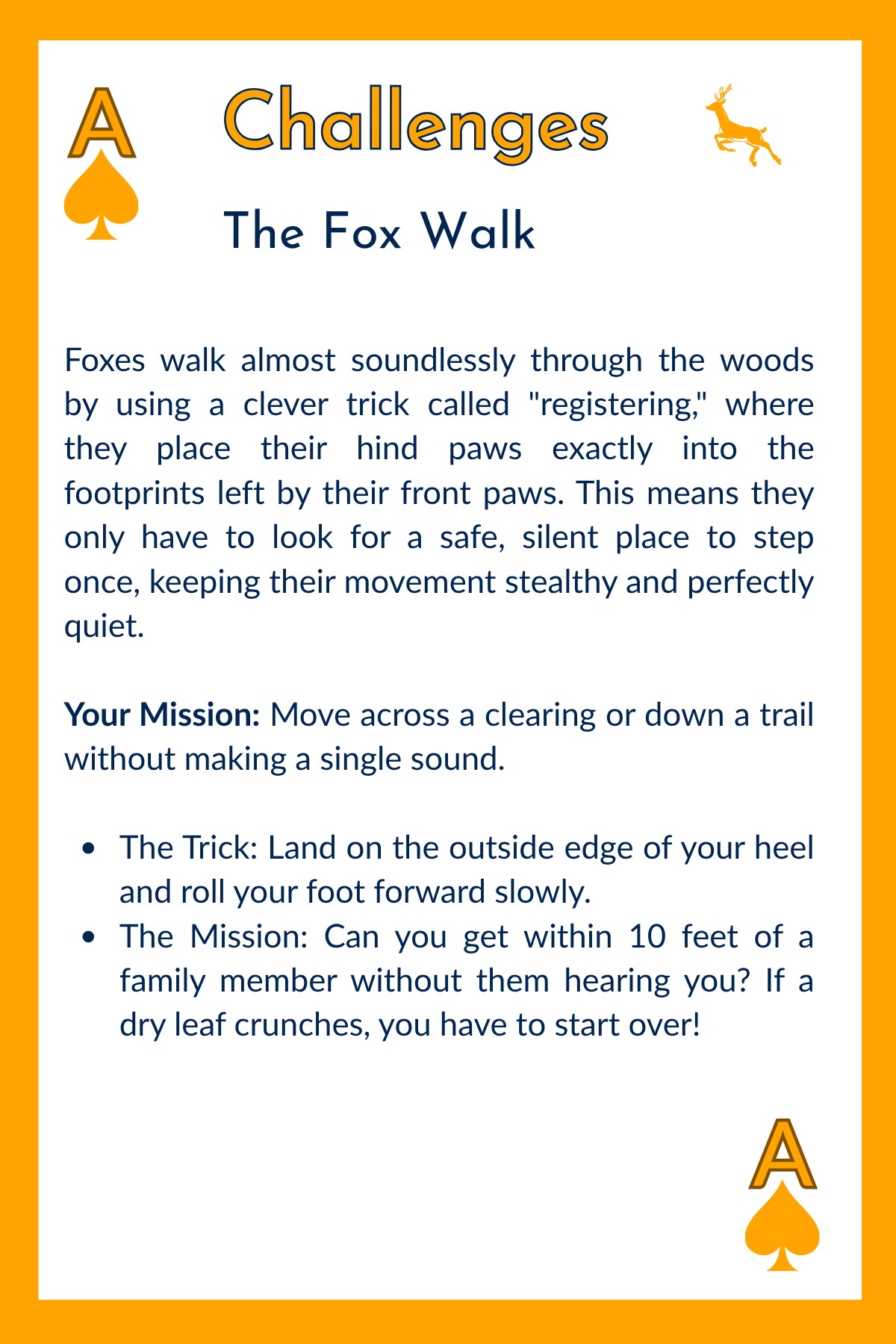
Challenges: These cards help gamify hikes and do fun play activities at the campsite
Ideas for Using the Curio Cards
The beauty of the Camp Curio deck is its total flexibility—these cards can be used anytime, anywhere. You can let your kids pick one card from each category as a "Challenge of the Day" right before heading out the door, or you can use them strategically to shift the energy of a trip.
Here are a few ways to deploy the cards in the wild:
At the Park: Rest & Regroup
When the kids need a moment to wind down, cool off, or regroup after high-energy playground play, it’s the perfect time to pause.
Pull a Reflection or Field Notes card. These encourage them to sit still, tune into their senses, and notice the smaller world around them while they catch their breath.
Use these as a catalyst for play or exploration. Unstructured time is as important as structured time. Sometimes, we just need a little nudge to get us excited about putting down a device, turning off the TV, and working through the ‘I’m bored phase.’ These cards can help set the tone.
On a Hike: The "Tired Legs" Cure
We’ve all been there: you’re a mile into the trail, and the "I'm tired, my legs hurt" mantra is starting to ramp up.
The Strategy: Do not despair—refocus their attention with an Investigate or Challenge card. Giving them an active mission, like a stealth walk or a scavenger hunt, tricks their brains into forgetting about the miles and turns the trail into a giant game.
Around the Bend: Break the hike or the day up into segments or rest stops. Have kids draw new cards when you reach a goal (Every ½ mile, up the next hill, at the next snack break, etc.)
Plan for Spontinatity: Some of the best moments aren’t meticulously planned but occur organically. When your child finds a rock to climb, a flower to inspect, or a log to investigate, make space for these moments. Have the field journal nearby for reflection, or just go with the flow. The cards can be used to help ‘find’ the moments that build the love of the outdoors and the respect for wild places.
In Transit
You don't have to wait until you arrive at your destination to start the adventure. Use the drive, bus ride, or walk to the park to set the stage.
The Strategy: Read a card's front side aloud to spark their curiosity so they are already hunting for answers the second their feet hit the dirt.
Activity Extensions & Prep: Use this quiet time to prep any simple materials they might need for a challenge, like grabbing an empty plastic cup for a filtration test or packing a magnifying glass.
Podcasts to Que Up: Tap into audio storytelling to build excitement! Queue up nature and science podcasts for kids like Wow in the World, Brains On!, or Smash Boom Best that match the theme of the day's cards.
Historical & Cultural Connections: Turn the ride into a history lesson. Look up whose ancestral Indigenous lands you are visiting, or share a quick story about ancient trackers, pioneers, or naturalists who used the very same wilderness skills your kids are about to try.
Let us know your favorite way to use the Curio Deck!
Inquiry-Based Questions: Keep the Conversation Going
Encouraging curiosity will help create a lifelong learner. Instead of giving your child a fact, give them a question. Use these stems to help them "unlock" the world around them.
To Spark Observation
These help kids slow down and see details they might have missed.
"What do you notice about the texture/color/shape of this...?"
"How is this [object] different from the one we saw ten minutes ago?"
"If you were looking through a magnifying glass, what else do you think you’d see?"
"Where do you think that [trail/ant/water] is headed?"
To Encourage Hypothesis (The "Why")
These help kids think like scientists and imagine the reasons behind the patterns.
"What do you think would happen if we [moved this rock / came back at night / it started to rain]?"
"Why do you think the tree grew in that specific shape?"
"How do you think this animal stays warm/dry/safe right here?"
"What evidence can you find that suggests an animal was here earlier?"
To Fuel Imagination & Empathy
These help kids connect emotionally to the landscape.
"If this [tree/rock/river] could talk, what kind of stories would it tell?"
"How would this place look different if we were the size of an ant?"
"What would you build here using only what you see on the ground?"
"If you had to live here for one night, what would be your first move?"
To Reflect on the Experience
These help solidify the "Camp Curio" memories at the end of the day.
"What was the most surprising thing you discovered today?"
"Which of your five senses was the busiest while we were hiking?"
"What is one thing you want to look up when we get home to learn more?"
"How did your 'Challenge' card change the way you looked at the trail?"
Tips for Parents and Caregivers:
The "3-Second Rule": After asking a question, wait at least three seconds. 5th graders often need a moment to process the environment before they can put their thoughts into words.
Be an "I Wonder" Model: Use the phrase "I wonder..." often. "I wonder why those leaves are turning red earlier than the others?" It shows your child that even adults are still learning!
Value the Process, Not the Answer: If they give a "wrong" scientific answer, don't correct them immediately. Ask: "That's an interesting theory! What makes you think that?"